
Tenants
Mould in Your Apartment: Your Rights as a Tenant This Winter
6 min read · Gestion Condo
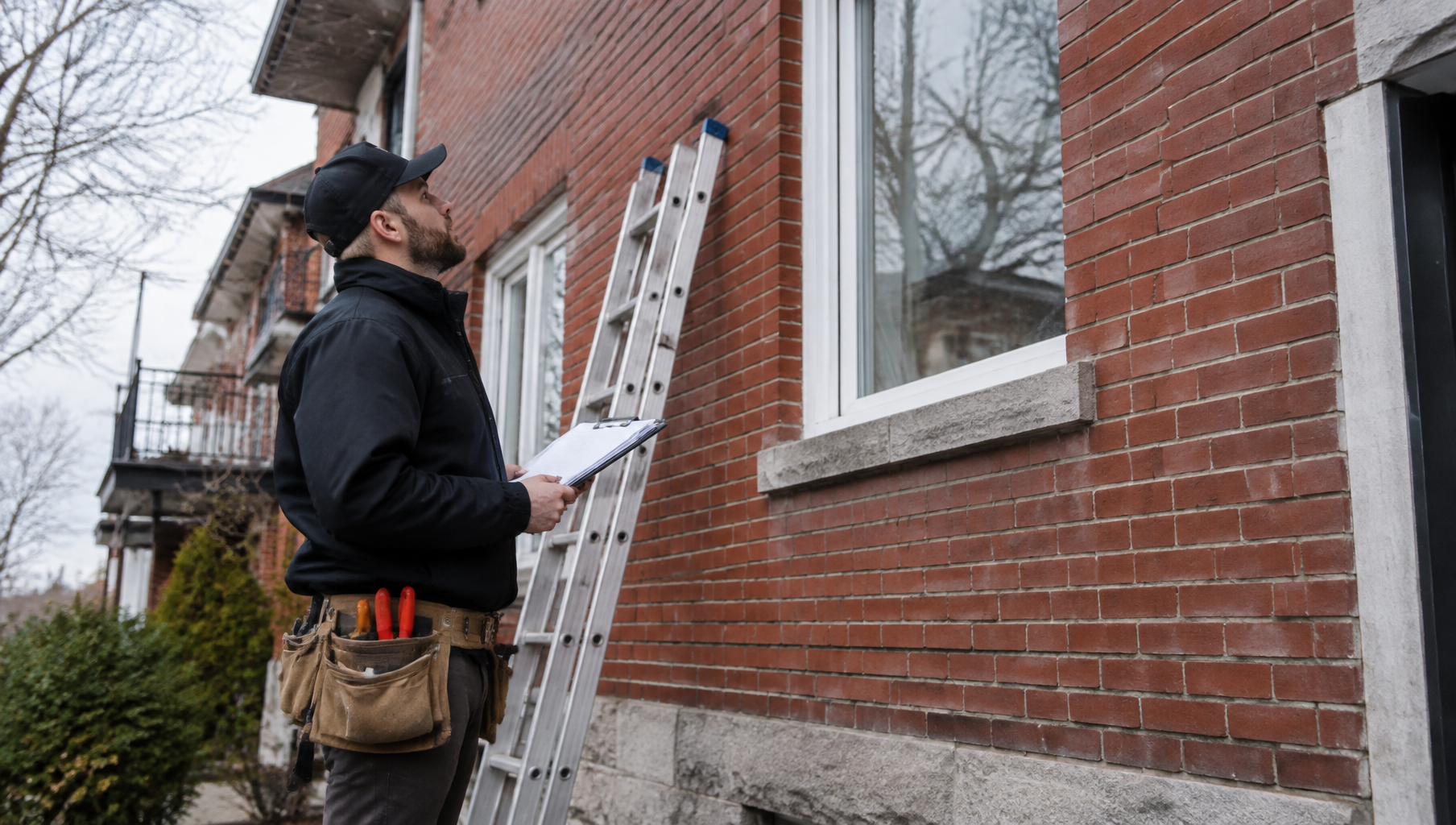
If mould appears in your apartment, your landlord must fix the problem when it comes from the condition of the building, such as a water infiltration, a faulty window or a ventilation fan that does not work. On your side, you must notify the landlord promptly, in writing, and do your part to limit humidity. If nothing is done, you can ask your borough for an inspection and turn to the Tribunal administratif du logement (TAL).
This article explains why mould tends to appear in winter, who is responsible for what, the steps to take in Montreal and the remedies available. It is general information, not legal or medical advice.
Why mould shows up in winter
During the cold season, warm and humid indoor air condenses on cold surfaces: window panes, window frames, corners of exterior walls and the back of furniture pushed against walls. According to the Quebec government, regular condensation on windows or walls can be a sign that indoor humidity is too high.
The sources of humidity are often everyday ones: long showers, cooking without a range hood, laundry drying indoors, or a unit kept too cool or poorly ventilated. But mould can also reveal a hidden problem, such as a leak through the roof or foundation, a pipe leaking inside a wall or a broken bathroom fan. That is why the source must be found before cleaning.
Your landlord's obligations
The Civil Code requires a landlord to deliver a dwelling in good habitable condition and to keep it that way for the entire lease. A lease clause in which you acknowledge that the unit is in good condition does not release the landlord from that duty. The landlord must therefore repair building defects that cause or encourage mould.
In Montreal, the by-law on the sanitation, maintenance and safety of dwellings (03-096) treats visible mould, along with the conditions that encourage it, as a threat to occupants' health or safety. Borough inspectors can step in and require corrective work.
Your obligations as a tenant
You must keep the unit clean, use it reasonably and notify the landlord within a reasonable time of any defect. If the mould is mainly caused by your habits, the landlord could hold you responsible.
A few simple habits go a long way: use the range hood and bathroom fan, avoid drying laundry without ventilation, keep the heating steady, leave a gap between furniture and exterior walls and wipe condensation off the windows. In cold weather, health organizations generally recommend indoor humidity of about 30 to 50%, which you can check with a hygrometer. A small spot can be cleaned yourself, but a larger area, roughly one square metre or more, or mould that keeps coming back, calls for a specialist and a search for the cause. For heating issues, see our article on winter heating.
Steps to take in Montreal
Start by documenting: dated photos, notes on when the stains appeared and humidity readings. Then send the landlord a written notice describing the problem and asking for repairs within a reasonable time; it can take the form of a formal demand letter. Keep proof that you sent it.
If nothing happens, call 311 to request an inspection from your borough. The inspector can visit the unit, contact the landlord and issue a report or a notice of non-compliance. That report can also be used as evidence before the TAL.
Remedies before the TAL
If the landlord does nothing, you can ask the TAL to order the work, authorize you to have it done at the landlord's expense, award you damages or reduce your rent. In some cases, you can also ask for the lease to be terminated. Avoid withholding rent on your own: apart from urgent repairs, only the tribunal can grant a reduction.
A repair is urgent when it is needed to prevent damage, such as a major leak. If the landlord refuses to act or cannot be reached, you can have it done and be reimbursed for reasonable expenses, with receipts. Finally, if the unit becomes unfit for habitation, meaning it is a serious threat to health or safety, you can leave, notifying the landlord in writing no later than 10 days after you move out. The landlord can contest, so get informed before making that decision.
Example: condensation in a Villeray 4 ½
Here is a hypothetical case. Samir rents a 4 ½ in Villeray for $1,250 a month. In December, black spots appear around the bedroom windows and his hygrometer reads 62%. He adjusts his habits, but notices the bathroom fan no longer works and a window seal is cracked. He sends a written notice on December 5. With no answer by mid-January, he calls 311, then files with the TAL using the inspector's report.
If the TAL granted him, for instance, a 10% reduction for three months, that would be $1,250 x 10% = $125 a month, or $375 in total. The actual percentage always depends on the evidence and how serious the situation is.
FAQ
My landlord says it is my fault. What can I do?
Document your habits and the condition of the building. An inspection or specialist report can help show whether the cause is how the unit is used or a building defect, such as an infiltration or faulty ventilation.
Can I stop paying rent?
No, not on your own. Only the cost of urgent repairs the landlord refused to make can be deducted, with receipts. Otherwise, only the TAL can grant a rent reduction.
Is mould dangerous to my health?
It can cause or worsen respiratory problems and allergies, especially in sensitive people. If you have symptoms, see a health professional.
Does my insurance cover mould?
Mould is often excluded or limited in policies. Check your contract; your tenant insurance may still cover some damage to your belongings caused by a sudden water leak.
A humidity problem caught early costs far less for everyone. If you are looking for a well-maintained home or have a question about your situation, write to us: our team replies within 4 business hours.
General information: rules and circumstances may vary. Check official sources or consult a professional about your situation.